


The Future of AI Computing Has Arrived
Arm’s powerful new AGI CPU marks a watershed moment in the artificial intelligence industry, signaling a dramatic shift in how the world’s most demanding AI workloads will be processed. This groundbreaking processor, unveiled with Meta as its exclusive first customer, represents more than just a hardware release — it is a declaration that the race toward Artificial General Intelligence has a new and formidable engine driving it forward.
—
What Makes Arm’s New AGI CPU So Revolutionary?
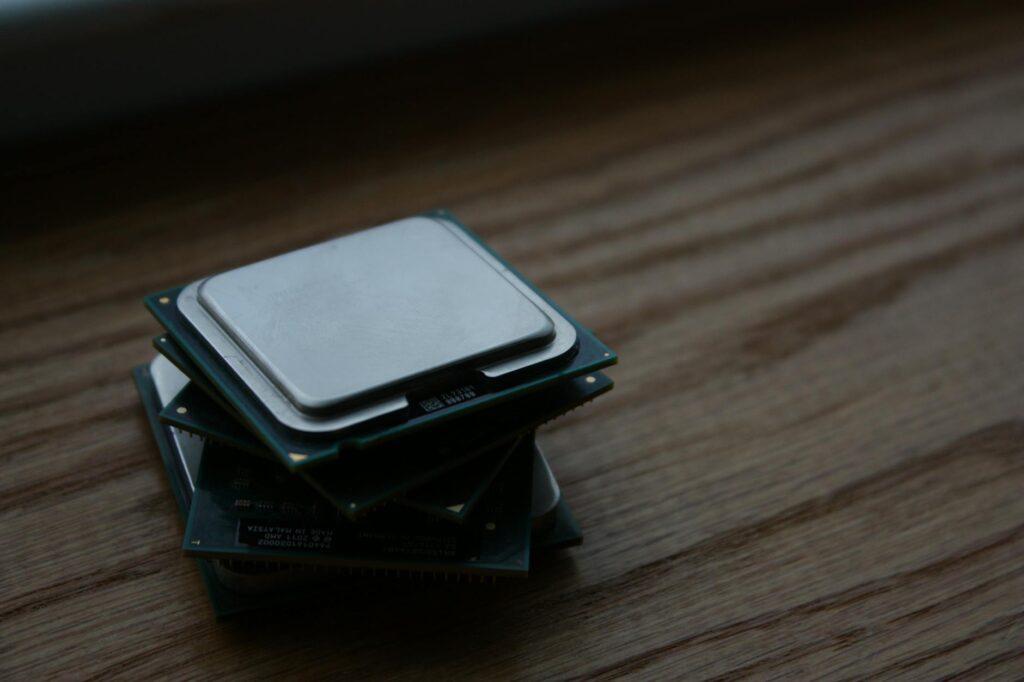
For years, the conversation around AI hardware has been dominated by GPUs, with Nvidia holding a near-monopolistic grip on the market for training and inference workloads. But Arm’s latest processor challenges that narrative in a profound way. Designed from the ground up with AGI-scale workloads in mind, this CPU pushes the boundaries of what central processing units were traditionally thought capable of.
Unlike conventional processors that rely on GPU offloading for heavy machine learning tasks, Arm’s new chip integrates dedicated AI acceleration directly into its architecture. The result is a processor that can handle massive parallelism, ultra-low-latency inference, and complex multi-modal AI reasoning tasks with remarkable efficiency. The chip is built on cutting-edge fabrication technology, enabling it to pack billions of transistors into a form factor optimized for data center deployment.
The design philosophy behind this processor is fundamentally different from previous generations. Engineers at Arm focused on reducing bottlenecks between memory and compute — one of the most persistent challenges in large-scale AI model execution. By reimagining the memory subsystem and introducing a novel interconnect architecture, the chip dramatically reduces the time models spend waiting for data, which translates directly into faster training cycles and more responsive inference pipelines.
—
Meta’s Role as the Exclusive First Customer
Meta’s selection as the exclusive launch partner for this revolutionary chip is no coincidence. The company has been aggressively investing in its AI infrastructure, most visibly through its development of the LLaMA family of large language models and its broader push toward building artificial general intelligence systems. With ambitions that span virtual reality, social media content moderation, recommendation systems, and autonomous AI agents, Meta’s computational demands are among the most complex and voluminous in the world.
By becoming the first customer for Arm’s AGI CPU, Meta gains a significant competitive advantage. Early access to silicon specifically designed for AGI-scale tasks means the company can begin optimizing its software stacks, model architectures, and data pipelines around the chip’s unique capabilities long before competitors can access similar hardware. In the rapidly moving landscape of AI development, even a six-month head start on hardware optimization can translate into years of product and capability leadership.
For Arm, the partnership is equally strategic. Having Meta — one of the most recognized names in global technology — as a launch customer sends a powerful signal to the rest of the industry. It validates the processor’s capabilities and positions Arm as a serious player in the AI accelerator market, a space where the company has historically been seen primarily as a mobile and embedded computing specialist.
—
Why This Changes the AGI Hardware Landscape
A New Contender in the Arm’s Powerful New AGI CPU Race
The emergence of a CPU-centric approach to AGI computing is significant for several reasons. First, CPUs are far more flexible than GPUs. While graphics processors excel at specific types of matrix multiplication and parallel operations that underpin most modern neural networks, they can be inefficient for workloads that require complex branching logic, symbolic reasoning, or hybrid neural-symbolic computations — all of which are increasingly seen as critical components of true AGI systems.
Arm’s processor is designed to handle both the brute-force numerical computation that current AI systems demand and the more nuanced logical reasoning tasks that next-generation AGI will require. This dual-mode capability could make it uniquely suited to the transitional period we are entering, where AI systems are beginning to move beyond narrow task-specific performance toward genuine general reasoning.
Second, Arm’s chip architecture offers compelling power efficiency advantages. In an era where data center energy consumption is under intense scrutiny — both for environmental and economic reasons — a processor that delivers high performance per watt is enormously attractive to hyperscalers and cloud providers. Meta has already committed to significant sustainability targets, and deploying more efficient AI hardware directly supports those goals while also reducing operational costs.
Third, the shift toward CPU-based AI computing could democratize access to advanced AI capabilities. GPUs, particularly Nvidia’s H100 and upcoming Blackwell chips, are extraordinarily expensive and supply-constrained. If Arm’s processor can deliver competitive performance at lower cost and with greater availability, it could open the door for a broader range of organizations — including startups, academic institutions, and governments — to participate meaningfully in AGI development.
—
The Broader Implications for the AI Industry
Nvidia’s Dominance Faces Its First Real Challenge
Nvidia’s stock has soared to extraordinary heights on the back of insatiable demand for its AI GPUs. But the arrival of Arm’s AGI-focused CPU, backed by one of the world’s largest technology companies, introduces real competitive pressure for the first time in years. Investors and industry observers are already beginning to ask whether the GPU’s unchallenged reign over AI computing is entering its final chapter.
It is worth noting that this is not a winner-takes-all scenario. The AI computing ecosystem is complex enough to support multiple hardware paradigms, and it is likely that future data centers will deploy a mix of GPUs, CPUs, and specialized accelerators depending on the specific workload. However, Arm’s entry into this space with a genuinely purpose-built AGI chip does meaningfully expand the competitive landscape.
Software Ecosystems Will Be Critical
Hardware is only as powerful as the software that runs on it. One of Arm’s key challenges will be building out the software ecosystem around its new processor. This includes compiler support, AI framework compatibility — particularly with PyTorch and JAX, the dominant frameworks used by Meta and the broader research community — as well as developer tools, profiling utilities, and model optimization libraries.
Meta’s deep involvement as a launch partner likely means that significant software work has already been done in tandem with the chip’s development. Meta’s engineering teams have extensive experience optimizing AI workloads at scale, and their early work on the Arm platform could form the foundation of a broader open-source ecosystem that accelerates adoption across the industry.
—
Looking Ahead
The debut of this processor is not just a product launch — it is an inflection point. As the AI industry accelerates toward systems of increasing capability and generality, the hardware substrate on which those systems run becomes ever more critical. Arm’s bold entry into the AGI computing space, with one of the world’s most ambitious AI companies as its first customer, sets the stage for a fascinating new chapter in the history of computing.
Whether this chip ultimately fulfills its extraordinary promise will depend on many factors: real-world performance benchmarks, software ecosystem maturity, manufacturing scale, and the pace of AGI research itself. But one thing is clear — the hardware wars for artificial general intelligence have begun in earnest, and Arm has just fired a very loud opening shot.