




Mass Surveillance Exposed: How the FBI Secretly Monitors Millions Effortlessly
Mass surveillance has quietly become one of the most significant — and least openly discussed — realities of modern American life. While most citizens go about their daily routines, sending texts, browsing websites, and making phone calls, a vast and sophisticated infrastructure operates in the background, collecting, analyzing, and storing data on an almost incomprehensible scale. The Federal Bureau of Investigation, alongside other intelligence agencies, has developed tools and legal frameworks that allow it to monitor millions of people with minimal friction, minimal oversight, and — until whistleblowers and journalists pulled back the curtain — minimal public awareness.
—
The Architecture of Mass Surveillance
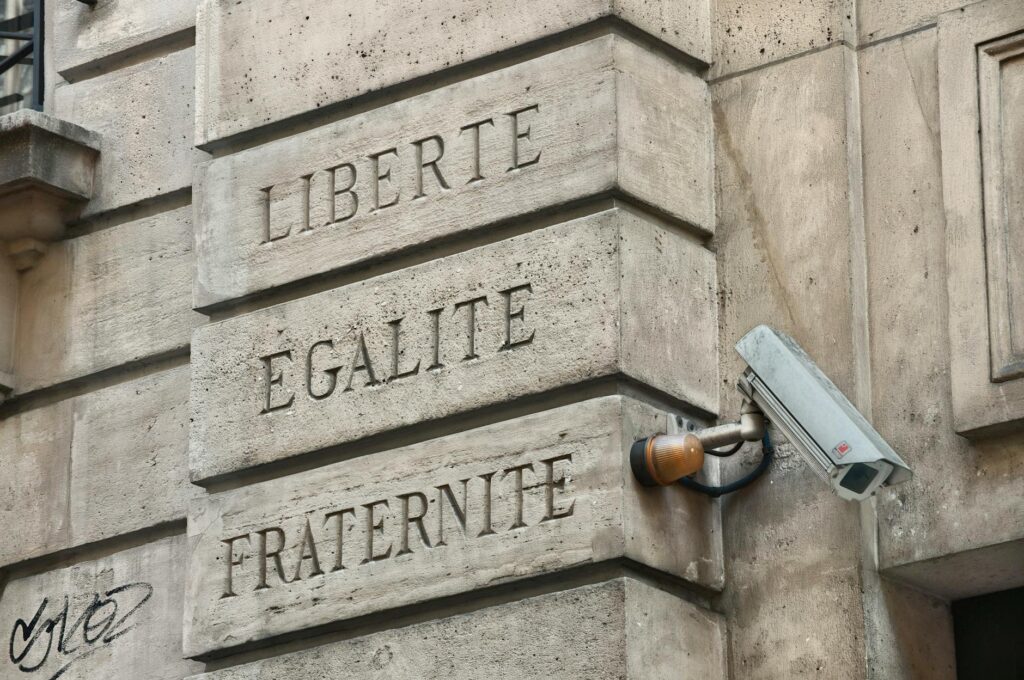
To understand how modern surveillance works, you first need to understand its architecture. It is not a single program or a single database. It is a layered ecosystem of legal authorities, technological tools, private-sector partnerships, and classified programs that together create an almost seamless web of observation.
At the foundation are legal instruments like the Foreign Intelligence Surveillance Act (FISA), Section 702, and Executive Order 12333. These laws and directives grant intelligence and law enforcement agencies extraordinarily broad powers to collect data — often without a traditional warrant. Section 702, for instance, allows the government to compel technology companies to hand over communications from foreign nationals. The catch? Americans’ communications, when they interact with those foreign nationals, are swept up in the process. This is known as “incidental collection,” though critics argue there is nothing incidental about it.
—
How the FBI Secretly Monitors Millions Through Legal Loopholes
One of the most revealing aspects of modern surveillance is how effectively the FBI and other agencies have used legal ambiguity to expand their reach. Rather than always seeking a judge’s approval for each surveillance target, agencies have exploited broad statutory interpretations to conduct what amounts to mass data collection.
The 2013 revelations by former NSA contractor Edward Snowden were a watershed moment. Documents he leaked revealed programs like PRISM, through which the NSA — with data shared with the FBI — collected internet communications directly from the servers of major companies including Google, Facebook, Microsoft, and Apple. Another program, called Upstream, tapped directly into the fiber-optic cables that carry internet traffic across the country and around the world.
But Snowden’s disclosures were just the beginning. Subsequent investigations by journalists, civil liberties organizations, and even government inspectors general have uncovered a pattern of consistent overreach. In 2021, the Foreign Intelligence Surveillance Court revealed that the FBI had conducted hundreds of thousands of unauthorized searches of Americans’ data — searches that lacked sufficient legal justification even under the already permissive rules of Section 702.
—
Digital Trails: Your Data Is the Surveillance Tool
Modern surveillance doesn’t always require wiretapping in the traditional sense. Today, your digital footprints do much of the work for investigators. Every time you use a credit card, search the internet, post on social media, or carry a smartphone, you generate data. That data is often accessible to law enforcement through a variety of mechanisms.
Cell-Site Simulators and Stingray Devices
One particularly invasive tool is the cell-site simulator, commonly known as a “Stingray.” These devices mimic cell phone towers, tricking nearby phones into connecting to them and revealing their location and identity. The FBI and local law enforcement agencies across the country have used these tools for years — often without warrants and sometimes without even informing judges of the technology’s use.
Documents obtained through Freedom of Information Act requests revealed that the FBI had non-disclosure agreements with local police departments, instructing them to actively conceal the use of Stingray devices from courts and defense attorneys. This is not surveillance as a last resort. This is surveillance as a standard operating procedure.
Social Media Monitoring at Scale
The FBI has also invested heavily in social media monitoring. Contracts with private analytics firms allow investigators to scrape and analyze public — and sometimes non-public — social media data at massive scale. Programs powered by artificial intelligence can track keywords, flag users based on their associations, and build detailed profiles of individuals who have never been charged with any crime.
—
The Role of Private Companies in Mass Surveillance
One of the most underappreciated aspects of the surveillance ecosystem is the central role played by private corporations. Technology companies, data brokers, and telecommunications firms have become essential partners — sometimes willing, sometimes compelled — in government surveillance.
Data brokers represent a particular blind spot in privacy law. These companies collect and sell enormous datasets about individuals — their locations, purchases, browsing habits, and social connections — without being subject to the same restrictions as direct government surveillance. Law enforcement agencies have exploited this gap by simply purchasing data that they would otherwise need a warrant to obtain. The result is a system where constitutional protections are rendered hollow by a simple commercial transaction.
Telecommunications companies have long cooperated with government surveillance requests. AT&T, as revealed by documents leaked to journalist Mark Klein, had installed dedicated rooms in its facilities to allow NSA analysts to tap directly into the internet backbone — a program operating for years before public knowledge.
—
The Oversight Problem
What makes mass surveillance particularly troubling is not just its scale, but the weakness of the oversight meant to constrain it. The Foreign Intelligence Surveillance Court, often described as a check on intelligence agency power, has historically approved the vast majority of surveillance requests submitted to it. Critics note that the court operates in near-total secrecy, hears arguments from only one side, and lacks the adversarial structure that makes ordinary courts effective safeguards.
Congressional oversight, while theoretically robust, has been hampered by the classified nature of surveillance programs. Lawmakers on intelligence committees are often briefed on programs under conditions that restrict what they can say publicly — even to their own colleagues.
Civil liberties organizations like the American Civil Liberties Union and the Electronic Frontier Foundation have fought legal battles to bring more transparency to these programs, with mixed success. Courts have often declined to hear cases on standing grounds — ruling that plaintiffs cannot prove they were surveilled — creating a Kafkaesque situation where the secrecy of surveillance itself shields it from legal challenge.
—
What Mass Surveillance Means for Democracy
The implications of unchecked mass surveillance extend far beyond individual privacy. Surveillance has a documented chilling effect on free speech, political organizing, journalism, and legal representation. When people know — or even suspect — that they are being watched, they self-censor. They avoid certain searches. They hesitate before contacting certain individuals. This behavior change doesn’t require the surveillance to be explicitly coercive. The mere awareness of the possibility is enough.
History provides sobering precedents. The FBI’s COINTELPRO program, active from the 1950s through the 1970s, used surveillance and infiltration to disrupt civil rights organizations, antiwar groups, and political movements. The targets included Martin Luther King Jr., who was surveilled extensively and subjected to FBI harassment. The lesson of COINTELPRO is that surveillance power, when unchecked, is surveillance power abused.
—
What Can Be Done
Reform is possible, but it requires political will. Advocates have called for meaningful changes including requiring individualized warrants for data access, prohibiting the purchase of commercially available data as a workaround to Fourth Amendment protections, strengthening the FISA Court’s adversarial structure, and mandating greater transparency through public reporting.
Some progress has been made. Courts have ruled in recent years that certain surveillance practices — including warrantless cell phone location tracking — violate the Fourth Amendment. But these victories are narrow and slow relative to the pace of technological development.
—
Conclusion
The machinery of mass surveillance did not emerge overnight. It was built piece by piece, program by program, legal interpretation by legal interpretation, across decades of expanding government power and technological capability. Understanding its scope, its methods, and its implications is not a matter of paranoia — it is a matter of civic responsibility. A democracy that watches its citizens in secret, at scale, and with insufficient accountability is a democracy that has traded one of its most fundamental values — freedom from unwarranted intrusion — for the promise of security.
The question is not whether mass surveillance exists. The evidence is overwhelming that it does. The question is what a free society chooses to do about it.